A brighter smile is one of the simplest cosmetic changes there is. At Longo Dentistry on Dundas Street in London, Ontario, we offer professional in-office whitening and custom take-home whitening trays. This page explains how whitening works, which stains it can and cannot fix, what to expect for sensitivity, and when bonding or veneers are the better tool.
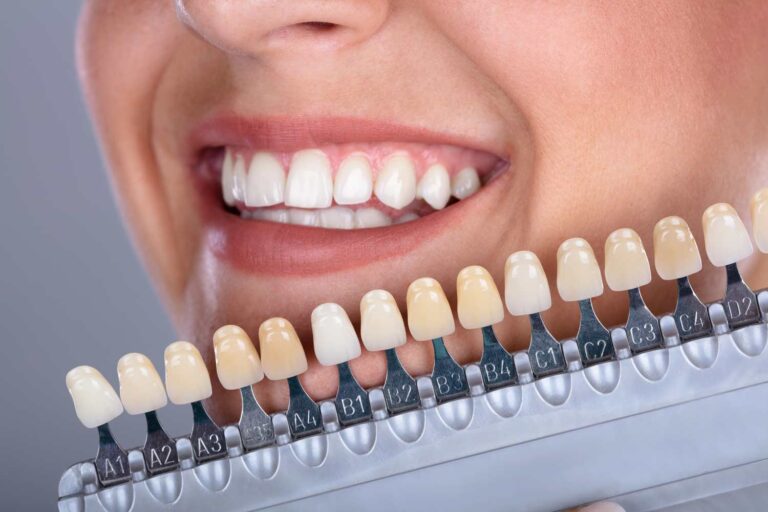
Professional whitening uses a peroxide gel that breaks down the stain molecules inside the enamel, so the tooth itself looks lighter. It does not wear away the surface. Before we start, we check your teeth and gums and give you a cleaning if one is due, because whitening works best on clean teeth and should never go on top of cavities or gum problems.
In-office whitening is done in one visit under a dentist’s supervision. A stronger gel is applied with your gums protected, so you see a clear change the same day. It suits people who want results quickly, for example before an event.
Take-home whitening uses trays made from a scan or impression of your teeth, with a gentler gel you wear at home for a set time each day over one to two weeks. It is slower, easier to control for sensitive teeth, and the trays can be reused later for top-ups.
Many patients combine the two: one in-office session to start, then trays to finish and maintain.
Whitening works best on yellow or brownish staining from coffee, tea, red wine, smoking or age. It works less well, or not at all, on some other kinds of discolouration.
Whitening usually helps if:
Whitening may not be the answer if:
Some people feel sensitivity for a day or two after whitening, usually a short twinge with cold drinks. It is temporary. If your teeth are already sensitive, take-home trays with a gentler gel and a sensitivity toothpaste for two weeks before you start make a real difference. We will adjust the plan if anything is uncomfortable.
Results usually last one to three years, depending on your habits. Coffee, tea, red wine and smoking bring stains back sooner. Regular cleanings help, and a short top-up with your take-home trays every so often keeps the shade where you want it.
Whitening changes colour only. If you also want to change the shape of a tooth, close a small gap or cover a chip, bonding or veneers may fit better. If your teeth are crooked, straightening first with Invisalign and whitening afterwards often gives the most natural result.
A tip if you are planning veneers or bonding: whiten first. Veneers and bonding are matched to the shade of the teeth around them, so whitening afterwards would leave them darker than your natural teeth.
We do not publish prices online. What drives the number you will hear at your consultation:
Yes, when it is done or supervised by a dentist. We check your teeth and gums first, because whitening on top of cavities, exposed roots or gum disease can cause pain. Professional gels are applied with protection for your gums.
Most people feel no pain. Some feel temporary sensitivity for a day or two, especially to cold. It fades on its own, and a sensitivity toothpaste helps.
Usually one to three years. Coffee, tea, red wine and smoking shorten it. A short top-up with take-home trays keeps the result going.
No. Whitening only lightens natural enamel. Crowns, veneers and tooth-coloured fillings stay the same shade, so we plan around any you have at the front.
Professional gels are stronger and fitted to your teeth, so results are faster and more even, with less gel reaching your gums. Strips can work for mild staining, but results vary.
Usually not, because whitening is cosmetic. Most private plans and the Canadian Dental Care Plan do not cover it.
Come in, tell us the shade you would like, and get an honest opinion on what whitening can do for your teeth. Longo Dentistry, 1221 Dundas Street, Unit 1, in Old East Village. Saturday appointments and one weekday evening. Call (519) 455-1221 or book online.